Inside SiriusXM Media's Pharma Audio Summit: The Takeaways
SiriusXM Media hosted 30 pharma marketing executives in New York City last month for its first-ever Pharma Audio Summit. And one thing became abundantly clear throughout the day’s conversations.
“Video did not in fact kill the radio star,” remarked David Fowler, SVP of Media Planning at Omnicom, during the roundtable discussion Future-Proofing Pharma Marketing: The Role of Audio. “Audio is alive, well, and thriving.”
Audio deserves more allocation
The numbers support it. Americans today spend more than four hours a day with audio content—representing 21% of their total media time 1—yet pharma marketers allocate around 1% of advertising dollars to the channel.
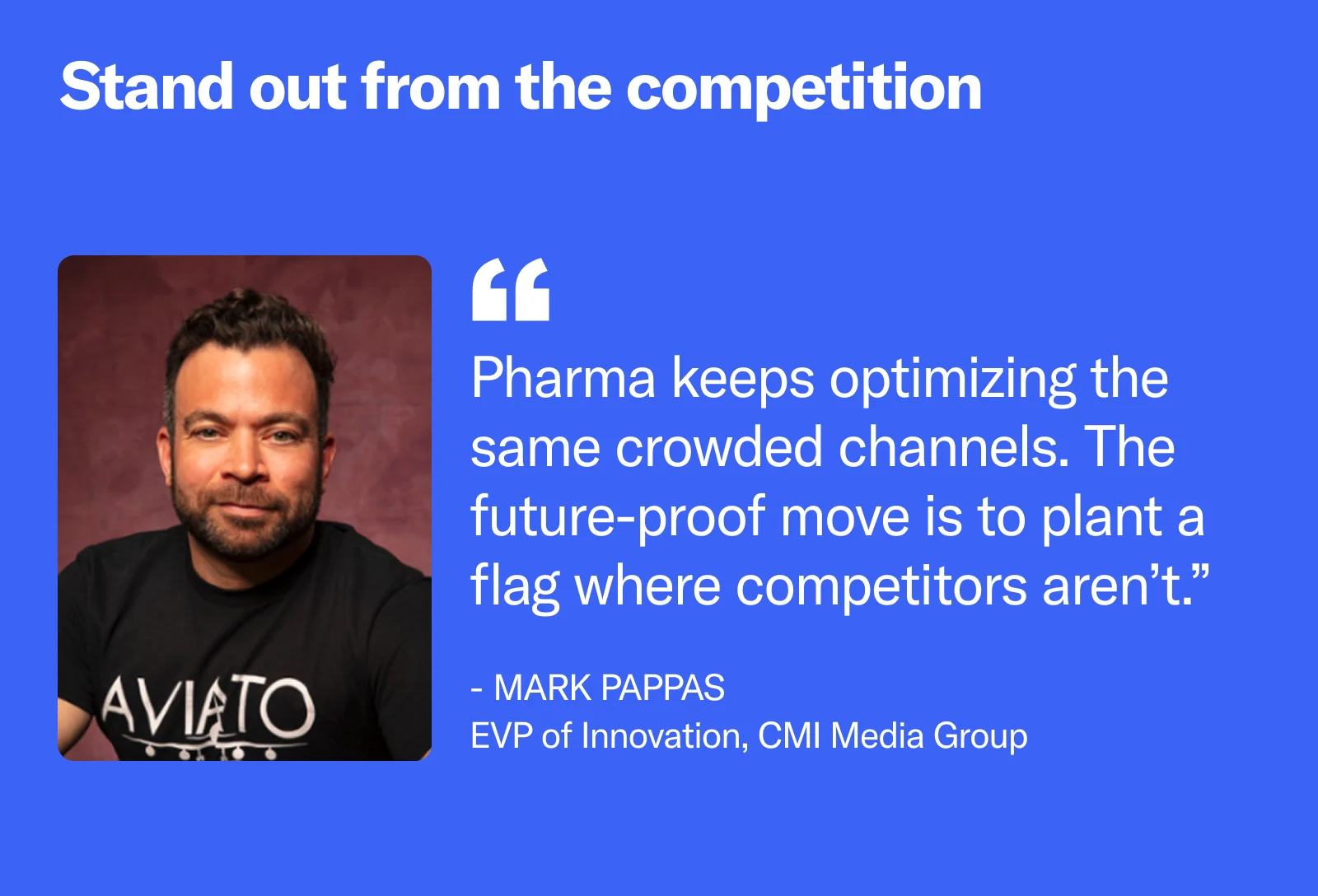
“Audio is the most wide-open competitive landscape in pharma media right now,” explained panelist Mark Pappas, EVP of Innovation at CMI Media Group. “Most brands aren’t there. The ones that are aren’t doing it at scale. That’s not a problem. That’s an opening.”
Pappas also emphasized audio’s unique ability to meet consumers throughout the day, “Audio is the only channel that follows people through their entire day. Morning commute, workout, commute home, dishes, dog walk. Phone, car, smart speaker, headphones. You don’t need a screen. You just need ears, and people give those up willingly for hours a day.”
So, why is audio still overlooked by many pharma marketers? “Audio and sonic branding are often left off in the creative briefing process from day one. And that is part of the problem," said Alexis Gossard, Senior Manager of Media Strategy at Bayer who spoke on the panel The Role of Programmatic Audio in Today’s Pharma Omnichannel Strategy.
When Gossard joined Bayer, she saw an opportunity to integrate audio more intentionally into the media mix and quickly became an internal champion for the channel.

Measuring audio’s true impact
Measurement also emerged as a central theme throughout the summit. Jill Kregel, Head of Partnerships at Omnicom Media Health, participated in the roundtable discussion and stated the need for attribution models that accurately reflect audio’s role in the consumer journey.
"Audio is an influence channel—not a 100% reach channel, not a last-click channel. It has to be measured where it actually sits in the patient journey, not against TV or digital benchmarks,” Kregel said. “The focus should be on any signal that shows it's driving real impact and moving patients forward."
Kyle Avery, Director of Business Development at The Trade Desk, used a restaurant analogy to explain the importance of multi-touch attribution:
“Think about eating at a restaurant. The waiter serves you the dish, but before arriving at your table, the chef wrote the menu, a dishwasher washed the plate, and a cook prepared and assembled the food. Multiple hands were involved in getting you that meal. Just because the waiter was the last person to touch the plate doesn’t mean that’s the only person who should receive credit in the process.”
From trust in podcasts to consumer impact
Podcasts were another major topic of conversation throughout the day. During a fireside chat, Christina “Tinx” Najjar, host of It’s Me, Tinx, spoke about the power of podcast creators to build authentic audience relationships.“I have built trust with a strong community of engaged listeners,” she told attendees.
That trust between listeners and hosts helps explain why SiriusXM Media podcast listeners are 25% more likely to say they have spoken with their doctor about a specific medication after hearing or seeing an advertisement for it. 2
Looking ahead: The future of pharma marketing
As the summit concluded, one overarching message remained: Pharma marketers have an opportunity to rethink where and how they connect with consumers.
Victoria Garcia, Senior Associate Director of Marketing for Chronic Kidney Disease at Boehringer Ingelheim and a roundtable panelist at the event, echoed a similar sentiment:
“Conversations like these remind me how powerful innovation, storytelling, and human connection can be in shaping the future of patient engagement.”
Experts from SiriusXM Media’s in-house audio creative agency, Studio Resonate, Tanvi Phadke and Iliana Ortega, also shared why audio is uniquely positioned to create deeper consumer connection.
They said, “Unlike visual media, audio doesn’t just show a story, it invites listeners to step inside it, drawing from personal memories, emotions, and lived experiences. In an industry where so much of the patient journey is deeply personal, that ability to create intimacy and emotional resonance can be incredibly powerful.”
As pharma marketers increasingly seek meaningful ways to engage diverse patient populations, Phadke and Ortega also shared their perspective on how audio can help brands create more authentic and culturally relevant connections.
“Multicultural audiences are often grouped together, but the reality is that trust, emotion, and relevance are built differently across communities. Audio gives brands the ability to adapt tone, language, storytelling, and cultural cues in ways that feel authentic and personal. For pharma marketers, that creates an opportunity to build deeper connections while maintaining a consistent brand identity.”
They also emphasized the long-term strategic opportunity for pharma brands investing in audio.
“In a fragmented media landscape, there’s a real opportunity for brands to start thinking about audio as a long-term asset, not just a tactical placement. The pharma brands that begin thinking intentionally about how they sound, not just how they look, will have a meaningful advantage moving forward.”
More pharma marketing insights


Related Insights
 Success Stories
SiriusXM Drives Cross-Funnel Lifts for a Breakfast Brand
Oct 12, 2026 Podcasts
Why Podcast Listeners Matter in the AI Era
Oct 12, 2026 Digital Audio
Why Fragmented Consumer Attention is Changing Media Buying
Oct 12, 2026 Targeting
What's the Vibe? How Mood Targeting Improves Your Ad Timing.
Oct 8, 2026
